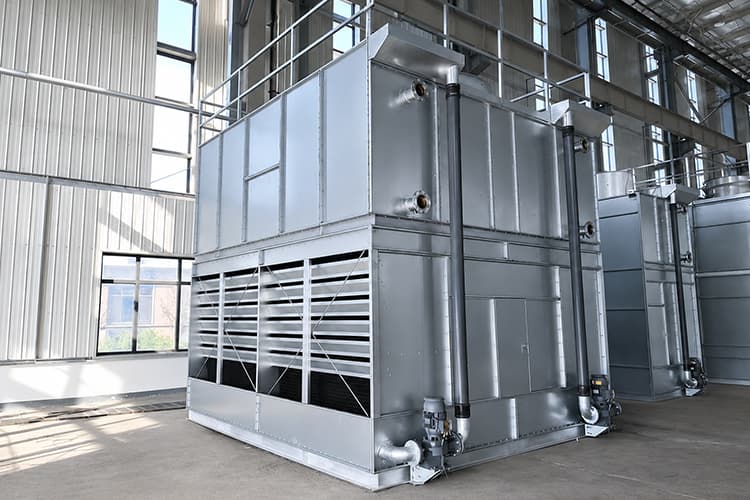
Compact Footprint
The vertical air-water arrangement helps reduce horizontal installation space compared with many crossflow layouts.
Thermocore counterflow closed circuit cooling towers are designed for HVAC, industrial process cooling,
equipment cooling, refrigeration support and manufacturing applications where clean process fluid,
compact installation and efficient evaporative heat rejection are important.
The counterflow design allows air to move upward against the downward spray water over the heat exchange coil.
The process fluid remains isolated inside the coil, helping protect chillers, compressors, molds, furnaces,
heat exchangers and closed-loop cooling systems from external contamination.
A counterflow closed circuit cooling tower is a closed-loop evaporative cooling system. The process fluid flows inside
a heat exchange coil, while spray water flows downward over the coil surface and air travels upward in the opposite direction.
This counterflow air-water arrangement supports efficient heat transfer in a compact tower structure.
This product is suitable for projects where the customer needs closed-loop fluid protection and efficient heat rejection,
but available installation space is more limited than a typical crossflow layout.
The system removes heat through indirect evaporative cooling. Hot process fluid stays inside the coil.
Spray water flows downward over the coil, and air moves upward through the heat exchange area.
This opposite-flow arrangement increases contact between air, spray water and the coil surface.

Counterflow design is selected when a project needs closed-loop fluid protection but also requires efficient heat exchange
in a compact footprint. The upward airflow and downward spray water arrangement can provide strong evaporative performance
while reducing the horizontal space required by the tower.
The vertical air-water arrangement helps reduce horizontal installation space compared with many crossflow layouts.
Air moving upward against falling spray water supports effective contact and stable heat rejection.
The process fluid stays inside the coil and is not directly exposed to outside air or spray water.
Counterflow towers are often selected when rooftop, plant room or site footprint is limited.
Suitable for systems requiring long operating hours, stable fluid protection and reliable heat rejection.
Coil material, casing, fan system, basin, pump, motor voltage and low-noise design can be customized.
Counterflow closed circuit cooling towers are used where the process fluid should remain protected and the project requires
compact evaporative heat rejection. They are suitable for HVAC, industrial process cooling and equipment cooling applications.
Both counterflow and crossflow closed circuit cooling towers protect the process fluid inside a coil.
The main difference is airflow direction and how the structure balances footprint, service access and heat exchange layout.
| Item | Counterflow Closed Circuit Cooling Tower | Crossflow Closed Circuit Cooling Tower |
|---|---|---|
| Airflow Direction | Vertical upward airflow against downward spray water | Horizontal airflow across the coil and spray water area |
| Footprint | Usually more compact | Usually requires more horizontal space |
| Maintenance Access | Can be tighter due to compact structure | Often easier in many layouts |
| Best For | Projects where compact layout is more important | Projects where serviceability and side access matter |
| Selection Logic | Choose when footprint is limited | Choose when maintenance access is a priority |
The key difference is fluid protection. Open towers expose circulating water directly to air, while counterflow closed circuit towers
keep the process fluid inside a coil. This makes closed circuit towers more suitable for systems that need cleaner fluid circulation.


| Item | Counterflow Closed Circuit Cooling Tower | Open Cooling Tower |
|---|---|---|
| Fluid Protection | Process fluid stays inside the heat exchange coil | Circulating water directly contacts air |
| Contamination Risk | Lower in the main process fluid loop | Higher because water is exposed to air |
| Heat Transfer | Indirect evaporative cooling through coil surface | Direct evaporative cooling |
| Initial Cost | Usually higher | Usually lower |
| Maintenance Focus | Coil surface, spray water, basin, fan and pump | Fill, basin, water distribution, water treatment and fan |
| Best For | Clean closed-loop process cooling with compact footprint | General condenser water and water cooling applications |
Selecting a counterflow closed circuit cooling tower requires accurate operating data. A professional selection should consider
heat load, process fluid type, flow rate, temperatures, wet bulb, coil material, spray water quality, pressure drop and installation space.
| Parameter | Why It Matters |
|---|---|
| Cooling Capacity | Determines tower size and required heat rejection capability. |
| Process Fluid Type | Water, glycol or special fluid affects coil design and pressure drop. |
| Fluid Flow Rate | Affects coil sizing, heat transfer and pump selection. |
| Inlet Fluid Temperature | Defines the hot-side operating condition. |
| Outlet Fluid Temperature | Defines the target cooling result. |
| Wet Bulb Temperature | Key ambient limit for evaporative cooling performance. |
| Coil Material | Affects corrosion resistance, service life and fluid compatibility. |
| Spray Water Quality | Affects scaling, corrosion, nozzle performance and maintenance. |
| Installation Space | Determines whether counterflow compact layout is suitable for the site. |
| Noise Requirement | Affects fan selection, fan speed and low-noise configuration. |
Performance depends on the coil, fluid connections, spray system, fan, basin, air inlet, drift control, casing and frame.
Each component should be selected to support stable heat rejection, compact structure and long-term reliability.
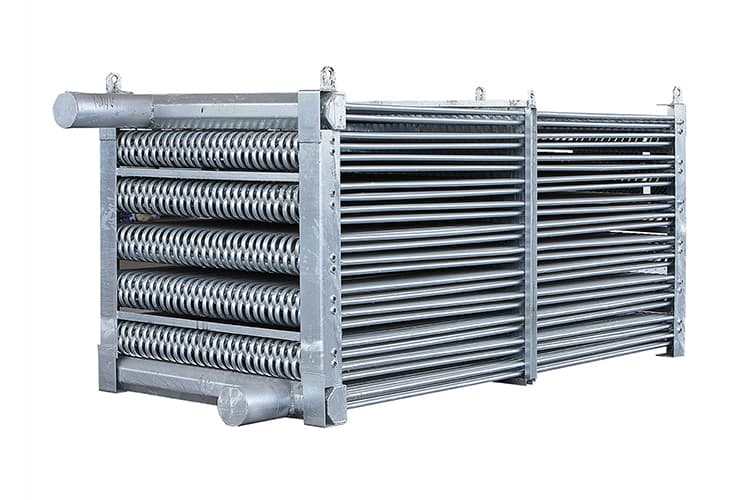
The core component where process fluid flows and transfers heat through the coil wall.
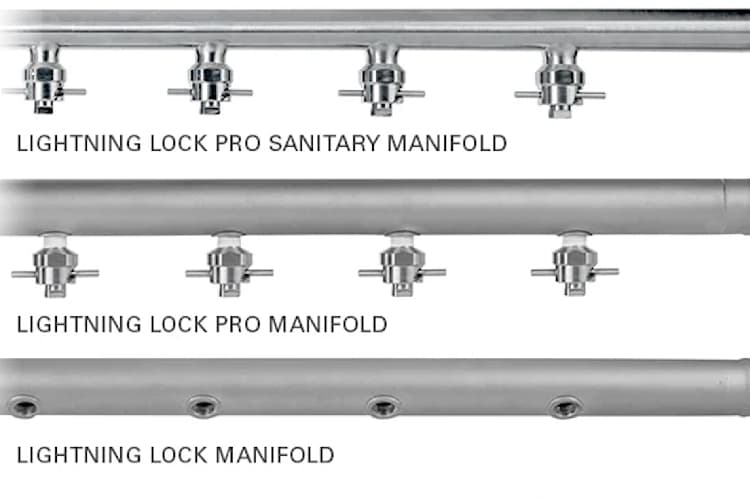
Distributes process fluid through the coil circuits and connect the tower to the closed loop system.

Distributes water over the coil surface for evaporative heat transfer.

Circulates spray water from the basin to the distribution system.

Moves air upward through the heat exchange section.

Guides air into the tower and helps reduce splash-out and debris entry.

Reduces water droplets carried out by discharge air.

Collects spray water and supports recirculation.
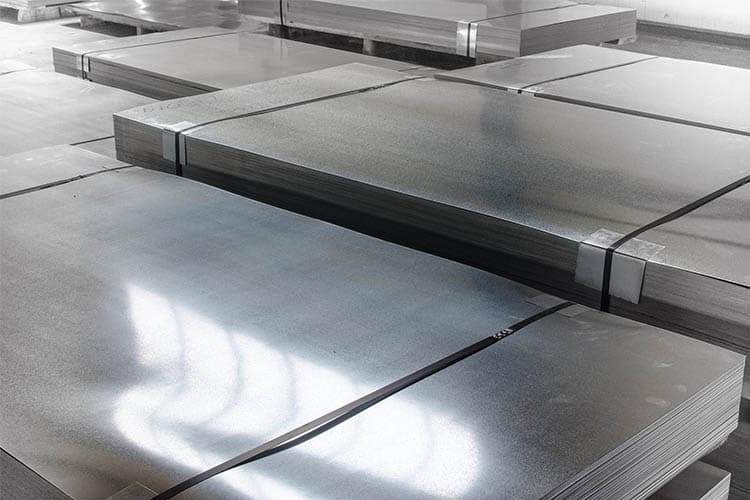
Protects components and supports the overall tower structure.
Material selection affects corrosion resistance, thermal performance, service life and maintenance cost.
The best configuration depends on process fluid, water quality, installation environment and project budget.

Coil material can be selected according to process fluid, corrosion risk, pressure drop and service life requirements.

Casing and structural materials should match outdoor exposure, corrosion environment and export project requirements.
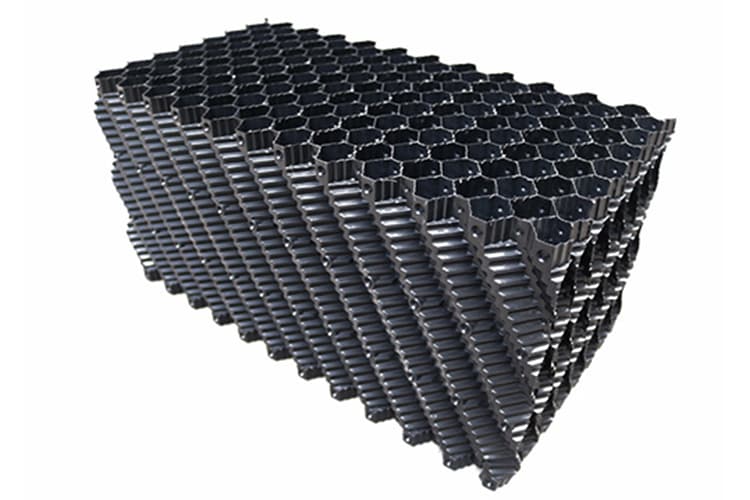
Water contact parts should resist scaling, corrosion and long-term spray water exposure.
Counterflow closed circuit cooling towers are selected when customers need both evaporative heat rejection,
protected process fluid and a compact tower arrangement.
Vertical airflow design helps reduce horizontal installation space.
The process fluid stays inside the coil and is not directly exposed to outside air.
Upward airflow against falling spray water supports strong heat transfer.
Cleaner process fluid helps reduce fouling risk inside connected equipment.
Suitable for systems requiring long operating hours and stable performance.
Coil, casing, basin and frame materials can be matched to project conditions.
Can be used with water or glycol solutions according to system design.
Helps protect chillers, molds, compressors, furnaces and heat exchangers.
Thermocore can customize counterflow closed circuit cooling towers according to cooling capacity, structure,
material, coil design, airflow, noise, voltage, corrosion environment and export shipping requirements.

For projects with special heat load, approach, wet bulb or fluid temperature requirements.
For projects requiring compact cells, special airflow, access doors or low-noise design.
For corrosion resistance, special voltage, OEM cooperation and international shipping requirements.
Send your cooling capacity, fluid type, flow rate, inlet and outlet temperature, wet bulb temperature and project layout.
Our engineering team will compare counterflow, crossflow and other cooling options for your project.
These FAQs are written for HVAC engineers, contractors, industrial buyers and procurement teams who need to understand
counterflow closed circuit cooling tower selection, operation and customization.
A counterflow closed circuit cooling tower is a closed-loop evaporative cooling system where the process fluid flows inside a heat exchange coil while spray water flows downward over the coil and air moves upward in the opposite direction. The process fluid does not directly contact air or spray water, which helps protect the main cooling loop from contamination.
Hot process fluid enters the coil, spray water is distributed over the coil surface, and air is drawn or forced upward through the tower. Heat transfers from the process fluid to the coil wall, then to the spray water and air. A small portion of spray water evaporates and removes heat, allowing the cooled process fluid to return to the system.
A counterflow closed circuit cooling tower is often selected when the project requires closed-loop fluid protection and a more compact footprint. The vertical airflow arrangement allows air to move against the downward spray water, supporting efficient heat exchange in a smaller installation area compared with many crossflow layouts.
In a counterflow closed circuit cooling tower, air moves upward against the downward spray water. In a crossflow closed circuit cooling tower, air moves horizontally across the coil and spray water area. Counterflow designs are often preferred for compact installations and efficient vertical air-water contact, while crossflow designs are often preferred when easier side access and maintenance layout are important.
It depends on the application. A counterflow closed circuit cooling tower protects the process fluid inside a coil, reducing contamination risk in the main loop. An open cooling tower exposes water directly to air and usually has a lower initial cost. If fluid cleanliness, equipment protection or glycol operation is important, the closed circuit design is usually more suitable.
Counterflow closed circuit cooling towers are suitable for HVAC systems, industrial process cooling, injection molding, furnace cooling, compressor cooling, refrigeration support, chemical process cooling, power systems and other projects where closed-loop fluid protection and compact installation are required.
Important selection data includes cooling capacity, process fluid type, fluid flow rate, inlet fluid temperature, outlet fluid temperature, local wet bulb temperature, glycol concentration if applicable, coil material preference, water quality, project location, installation space and noise requirement.
Yes. The process fluid is protected inside the coil, but the spray water loop is still exposed to air. Water treatment is required to control scaling, corrosion, biological growth and nozzle blockage. Poor spray water quality can reduce heat transfer and increase maintenance work.
If the project prioritizes easier side access and maintenance space is available, a crossflow closed circuit cooling tower may be preferred. If the customer only needs low initial cost and can accept open water exposure, an open cooling tower may be more economical. If water consumption must be minimized, a dry cooler or adiabatic cooler may be considered.
To receive an accurate quotation, send the cooling capacity, process fluid type, fluid flow rate, inlet and outlet fluid temperatures, design wet bulb temperature, project location, power supply, installation space, material preference and any noise, corrosion or customization requirements.
Send us your cooling capacity, process fluid type, flow rate, inlet and outlet temperature, wet bulb temperature
and project location. Our engineering team will help you select a suitable counterflow closed circuit cooling tower configuration.