ThermoCore

Closed Circuit Cooling Tower Manufacturer

Closed Circuit Cooling Towers

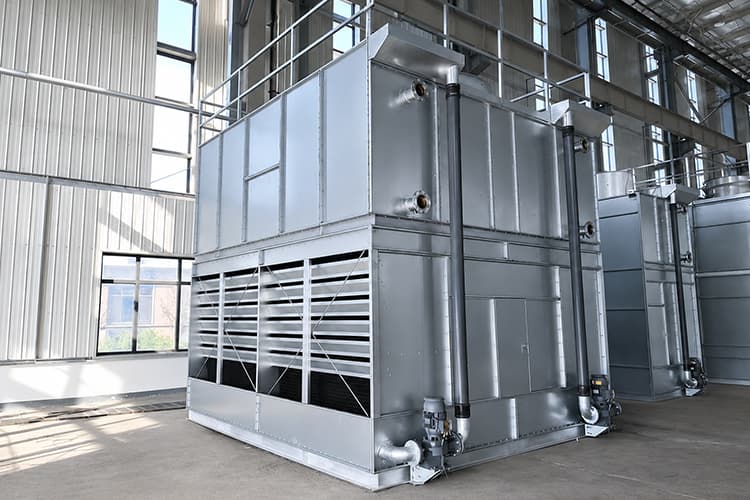
Thermocore manufactures closed circuit cooling towers for industrial process cooling, HVAC systems, refrigeration plants, power facilities, chemical production and equipment cooling applications. Our closed loop cooling tower solutions are designed to keep process fluid isolated inside a heat exchange coil, reduce contamination risk, protect connected equipment and support long-term stable operation.

Products We Supply

Closed Circuit Cooling Towers We Supply

Closed circuit cooling towers can be configured according to airflow design, coil arrangement, cooling capacity, installation space, process fluid, maintenance access and project environment. Thermocore supplies crossflow, counterflow, composite flow, forced draft and customized closed loop cooling tower systems.

Crossflow Closed Circuit Cooling Towers

Crossflow Closed Circuit Cooling Towers

Crossflow closed circuit cooling towers use horizontal airflow across the heat exchange coil and spray water area. They provide convenient access for inspection and maintenance.

  • Industrial process cooling
  • HVAC and equipment cooling
  • Projects requiring easier maintenance access
View Crossflow Options →
Applications

Applications of Closed Circuit Cooling Towers

Closed circuit cooling towers are used in systems where clean circulating fluid, reduced contamination, stable heat rejection and better equipment protection are important. They are especially suitable for industrial process cooling, equipment cooling, HVAC systems, refrigeration plants and special fluid loops.

Definition

What Is a Closed Circuit Cooling Tower?

A closed circuit cooling tower is a heat rejection system that cools process fluid through a closed heat exchange coil. The process fluid flows inside the coil and does not directly contact outside air or spray water. This design helps keep the circulating fluid cleaner, reduce contamination risk and protect connected equipment in the cooling loop.

Closed circuit cooling towers are also commonly called closed loop cooling towers, closed cooling towers or evaporative fluid coolers. They are widely used where fluid cleanliness, equipment protection, reliable cooling and reduced system contamination are important.

Closed loop cooling tower Evaporative fluid cooler Closed circuit cooler Industrial closed cooling tower
Working Principle

How Does a Closed Circuit Cooling Tower Work?

A closed circuit cooling tower removes heat through indirect evaporative cooling. The process fluid stays inside the heat exchange coil, while spray water and airflow remove heat from the coil surface. This allows the system to reject heat without exposing the main process fluid directly to outside air or spray water.

Closed Circuit Cooling Towers working principle diagram
1
Hot process fluid enters the coilThe process fluid stays inside a closed heat exchange coil.
2
Spray water wets the coil surfaceSpray water flows over the outside of the coil to support heat transfer.
3
Airflow passes through the towerFans move air across or through the coil and spray water area.
4
Evaporation removes heatA portion of spray water evaporates and carries heat away from the coil.
5
Cooled fluid returns to the systemThe process fluid leaves the coil without direct exposure to air or spray water.
Comparison

Closed Circuit Cooling Tower vs Open Cooling Tower

Closed circuit cooling towers and open cooling towers are both used for heat rejection, but their cooling methods and system requirements are different. The right choice depends on fluid cleanliness, equipment protection, water quality, maintenance preference, project budget and application requirements.

Closed Circuit Cooling Tower
Open Cooling Tower
Item Closed Circuit Cooling Tower Open Cooling Tower
Cooling Method Indirect cooling through a heat exchange coil Direct contact between water and air
Process Fluid Process fluid stays inside a closed coil Circulating water is exposed directly to air
Fluid Cleanliness Higher fluid cleanliness Lower than closed circuit systems
Contamination Risk Lower because process fluid is isolated Higher because water contacts outside air
Initial Cost Usually higher Usually lower
Maintenance Focus Coil, spray water loop, fan, basin and water treatment Fill, basin, water treatment and distribution system
Best For Clean process loops, equipment protection and special fluids HVAC, chillers and general industrial cooling
Main Advantage Cleaner fluid and better equipment protection Simple structure and cost-effective heat rejection
Technical Selection

Technical Selection Guide for Closed Circuit Cooling Towers

Selecting a closed circuit cooling tower requires more than choosing a model by flow rate. The correct tower should be selected according to cooling capacity, process fluid, inlet/outlet temperature, wet bulb temperature, coil material, spray water quality, installation space, noise requirement and corrosion environment.

Selection Parameter Meaning Why It Matters
Cooling Capacity Total heat that must be rejected Determines tower size, coil area and thermal performance
Process Fluid Flow Rate Amount of fluid circulating through the coil Affects coil sizing, pressure drop and cooling performance
Inlet Fluid Temperature Hot fluid temperature entering the coil Defines starting thermal condition
Outlet Fluid Temperature Required cooled fluid temperature Determines cooling target and tower capacity
Wet Bulb Temperature Local ambient wet bulb condition Limits evaporative cooling performance
Process Fluid Type Water, glycol solution or other process fluid Influences coil material, flow resistance and system compatibility
Coil Material Heat exchange coil material requirement Affects corrosion resistance, durability and service life
Spray Water Quality Water condition in the tower spray loop Affects scaling, corrosion, nozzle performance and maintenance
Installation Space Available footprint and height Influences crossflow, counterflow, composite or forced draft selection
Noise Requirement Acceptable noise level at site Affects fan selection, layout and low-noise design
Material Requirement Required corrosion resistance and structural durability Influences stainless steel, FRP, galvanized steel or Aluzinc selection

Not Sure Which Closed Circuit Cooling Tower Is Right for Your Project?

Choosing a closed circuit cooling tower can be difficult if you are not sure about heat load, process fluid, coil material, wet bulb temperature, tower structure or installation space. Send us your operating data and project requirements, and our engineering team will recommend a suitable model and configuration.

Cooling capacity Process fluid Fluid flow rate Wet bulb Coil material
Ask for Model Selection
Material Options

Closed Circuit Cooling Tower Material Options

Material selection affects corrosion resistance, structural strength, coil durability, service life, maintenance requirements and project cost. For closed circuit cooling towers, materials should be selected according to process fluid, spray water quality, outdoor environment, corrosion level and project budget.

Stainless Steel

Stainless Steel

Stainless steel materials such as #304 and #316 can be selected for projects requiring higher corrosion resistance, cleaner operation or demanding industrial environments. Stainless steel is often considered for coils, basins, fasteners, panels or water-contact components depending on the application.

#304 stainless steel: suitable for many general industrial environments where improved durability and cleaner appearance are required.
#316 stainless steel: suitable for coastal areas, chemical environments or applications with higher corrosion resistance requirements.
FRP

FRP

FRP is widely used for closed circuit cooling tower casing because it provides corrosion resistance, lightweight structure and outdoor durability. It is suitable for many industrial sites, outdoor installations and humid operating environments.

Common use: casing, panels, fan stack, air inlet parts and external shell structure.
Main value: corrosion resistance, weather resistance, lighter structure and practical maintenance.
Galvanized Steel / Aluzinc Steel

Galvanized Steel / Aluzinc Steel

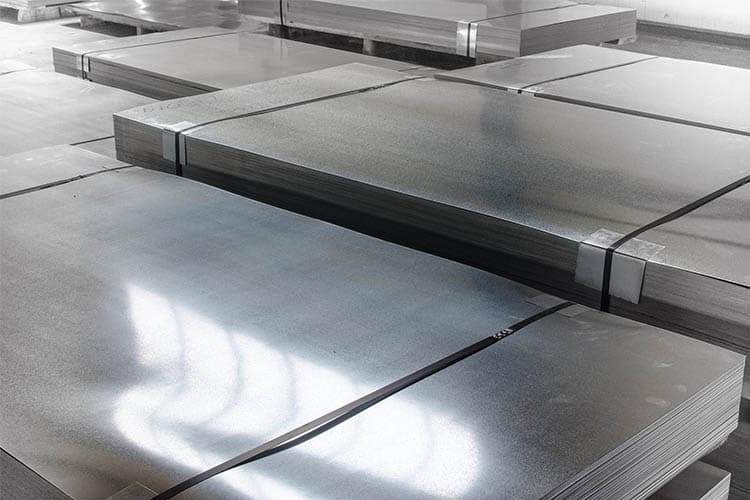
Galvanized steel and Aluzinc steel are commonly used for frames, support structures, panels and project-specific components where strength, practicality and cost efficiency are important.

Common use: tower frame, support structure, structural panels, brackets and internal support parts.
Main value: practical strength, cost efficiency and suitable durability for many industrial projects.
Key Components

Key Components of a Closed Circuit Cooling Tower

A closed circuit cooling tower is not only a casing and a fan. Its performance depends on the heat exchange coil, spray water system, airflow design, drift control, basin structure and maintenance access. Each component should be designed to support stable heat rejection and long-term operation.

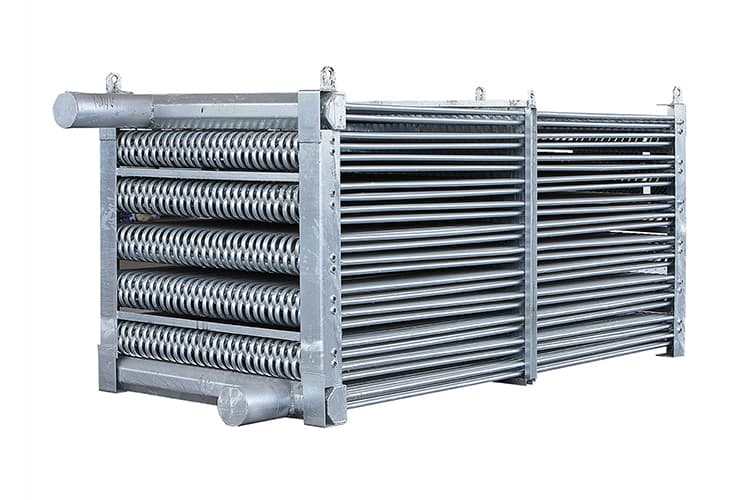
Heat Exchange Coil

Heat Exchange Coil

The core heat transfer component. Process fluid flows inside the coil and is cooled indirectly by spray water and airflow.

Spray Water System

Spray Water System

Distributes water evenly over the coil surface and includes nozzles or distribution hardware for stable evaporative heat transfer.

Axial Fan

Axial Fan

Moves airflow through the tower. Fan design affects cooling performance, energy consumption and noise level.

Fan Motor and Drive System

Fan Motor and Drive System

Provides stable fan operation and can be configured according to project voltage and efficiency requirements.

Drift Eliminator

Drift Eliminator

Reduces water droplet carryover and helps lower water loss from discharge air.

Air Inlet Louver

Air Inlet Louver

Guides air into the tower and helps reduce splash-out, debris entry and sunlight exposure.

Spray Water Basin

Spray Water Basin

Collects spray water for recirculation. Basin material and access affect maintenance and service life.

Spray Pump

Spray Pump

Circulates spray water from the basin to the distribution system over the coil.

Casing and Frame

Casing and Frame

Protect internal components and form the external tower structure.

Operation & Maintenance

Water Treatment and Maintenance for Closed Circuit Cooling Towers

Closed circuit cooling towers protect the main process fluid by keeping it inside the coil. However, the spray water loop is still exposed to air and should be properly treated and maintained. Regular inspection helps protect the coil surface, spray nozzles, basin, fan and water distribution system.

Cooling tower maintenance and water treatment

Process Fluid Loop Protection

The main process fluid stays inside the coil and is better protected from dust, air contamination and spray water exposure.

  • Reduced contamination risk
  • Cleaner circulation loop
  • Better equipment protection

Spray Water Loop Treatment

The spray water loop still requires proper treatment to control scaling, corrosion, biological growth and nozzle blockage.

  • Control scale on coil surface
  • Maintain nozzle performance
  • Reduce basin sediment

Routine Maintenance Items

Regular inspection helps maintain cooling performance, reduce downtime and extend tower service life.

  • Inspect coil surface and spray nozzles
  • Check fan, motor and pump
  • Clean basin and drift eliminators
Advantages

Advantages of Closed Circuit Cooling Towers

Closed circuit cooling towers are selected when fluid cleanliness, equipment protection and stable industrial cooling are more important than the lowest initial equipment cost. The closed loop design helps isolate the process fluid from outside air and spray water.

Cleaner Process Fluid

The process fluid is isolated inside the coil and does not directly contact air, dust or spray water.

Reduced Contamination Risk

Closed loop design helps reduce dust, debris and biological contamination in the main fluid loop.

Better Equipment Protection

Cleaner circulation helps protect chillers, compressors, furnaces, molds, hydraulic systems and heat exchangers.

Suitable for Special Fluids

Closed circuit towers can be used when the cooling loop contains glycol solution or process fluid that should remain isolated.

Lower Main Loop Fouling

Because the main fluid loop is not open to the atmosphere, fouling risk in connected equipment can be reduced.

Stable Industrial Operation

Closed circuit systems support continuous process cooling where operating stability is important.

Flexible Material Selection

Coil, casing, basin and structural materials can be selected according to corrosion and project requirements.

Better for Equipment-Critical Systems

Suitable for systems where connected equipment is expensive, sensitive or difficult to clean frequently.

Why Choose Thermocore

Why Choose Thermocore Closed Circuit Cooling Towers

We support industrial customers with engineering-based selection, durable materials, custom project design and international export support. This section is separated from customization so buyers can first understand our manufacturing and engineering value before reviewing special options.

Why Choose Thermocore

Engineering-Based Selection

Model selection based on capacity, flow rate, fluid type, temperatures, wet bulb and site conditions.

Multiple Configurations

Crossflow, counterflow, composite flow, forced draft and customized closed cooling tower configurations.

Durable Material Options

FRP, stainless steel, galvanized steel and Aluzinc steel options for different environments.

Export Project Support

Technical communication, quotation, drawing confirmation, packaging and shipping coordination.

Industrial Application Experience

Suitable for HVAC, refrigeration, manufacturing, chemical, power and process cooling applications.

Closed Loop Cooling Knowledge

Support for coil selection, process fluid considerations, spray water treatment and system protection.

Project Communication

We help clarify operating data, technical requirements, drawing details and shipment constraints.

Long-Term Support

Support for spare parts, maintenance questions and future capacity expansion discussions.

Custom Engineering

Custom Engineering Options for Closed Circuit Cooling Towers

Different closed loop cooling projects require different configurations. We support project-based customization for engineering companies, distributors, contractors, OEM partners and industrial end users. Customization can involve thermal capacity, tower structure, coil material, corrosion resistance, noise control, voltage and shipping layout.

Custom Engineering / Technical Drawing

Thermal & Structure Customization

For projects with special cooling capacity, footprint, height, airflow direction or installation space requirements.

Cooling capacity customization Crossflow structure Counterflow structure Composite flow structure Forced draft structure Modular tower design

Material & Anti-Corrosion Customization

For projects with demanding water quality, coastal environment, chemical atmosphere or longer service life requirements.

Heat exchange coil options #304 / #316 stainless steel FRP casing Galvanized steel structure Aluzinc steel panels Anti-corrosion design

Project & Export Customization

For international projects requiring special voltage, low-noise design, winter operation or container loading planning.

Low-noise fan system Special motor voltage Winter operation design Container loading design OEM / private label Project-based packaging
FAQ

Closed Circuit Cooling Tower FAQ

These questions are designed to answer common buyer, engineer and AI-search queries about closed circuit cooling towers.

What is a closed circuit cooling tower?

A closed circuit cooling tower is a heat rejection system that cools process fluid inside a closed heat exchange coil without exposing the fluid directly to air or spray water.

What is a closed loop cooling tower?

A closed loop cooling tower is another name for a closed circuit cooling tower. It keeps the process fluid in a closed loop inside the heat exchange coil.

How does a closed circuit cooling tower work?

Hot process fluid flows through a coil while spray water and airflow remove heat from the coil surface through evaporative cooling. The process fluid remains isolated inside the coil.

What is the difference between a closed circuit cooling tower and an open cooling tower?

A closed circuit cooling tower cools fluid indirectly through a coil, while an open cooling tower cools water directly through air-water contact.

When should I choose a closed circuit cooling tower?

You should consider a closed circuit cooling tower when your system requires cleaner circulating fluid, lower contamination risk or better protection for connected equipment.

What types of closed circuit cooling towers are available?

Common types include crossflow closed circuit cooling towers, counterflow closed circuit cooling towers, composite flow closed circuit cooling towers, forced draft closed circuit cooling towers and customized closed loop cooling towers.

What information is needed to select a closed circuit cooling tower?

Cooling capacity, process fluid type, fluid flow rate, inlet and outlet temperature, wet bulb temperature, coil material preference, water quality, installation space and project location are usually needed.

Do closed circuit cooling towers need water treatment?

Yes. The process fluid loop is protected, but the spray water loop still needs treatment to control scaling, corrosion and biological growth.

What materials are used in closed circuit cooling towers?

Common materials include stainless steel #304 or #316, FRP, galvanized steel and Aluzinc steel. Coil material should be selected according to process fluid and corrosion conditions.

How do I reduce maintenance for a closed circuit cooling tower?

Maintain proper spray water treatment, inspect the coil surface, clean nozzles and basin, check the fan and pump, and keep drift eliminators and air inlets clean.
Start Your Project

Need a Closed Circuit Cooling Tower for Your Project?

Send us your cooling capacity, process fluid type, flow rate, inlet and outlet temperature, wet bulb temperature and project location. Our engineering team will help you select a suitable closed circuit cooling tower model and configuration for your application.

Scroll to Top