ThermoCore

Dry Cooler Manufacturer

Dry Coolers

Thermocore manufactures dry coolers, adiabatic coolers and industrial air coolers for HVAC systems, process cooling, data centers, refrigeration plants, power facilities and heavy-duty industrial applications. Our air-cooled heat rejection systems are engineered to cool water, glycol or process fluids through closed finned coils, helping reduce water consumption, simplify fluid protection and support reliable year-round operation.

Products We Supply

Dry Coolers and Industrial Air Coolers We Supply

Dry coolers can be designed in different structures according to heat rejection capacity, coil arrangement, airflow direction, installation space, ambient temperature, noise requirement and fluid type. Thermocore supplies V type dry coolers, horizontal dry coolers, adiabatic coolers and industrial air coolers for commercial and industrial projects.

V Type Dry Cooler

V Type Dry Cooler

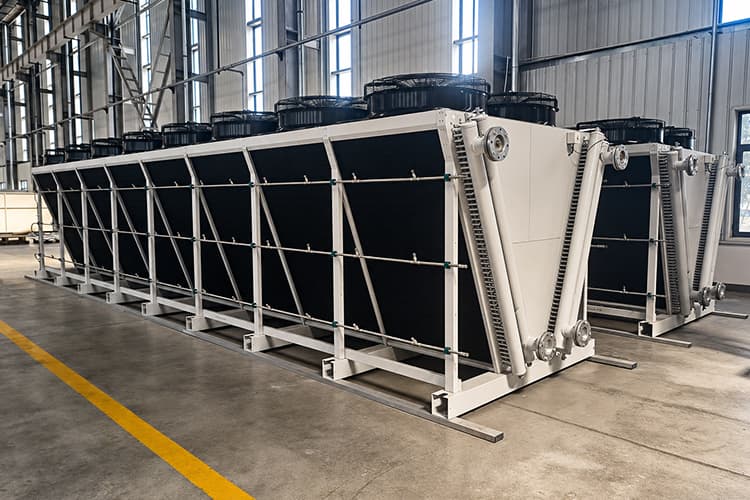
V type dry coolers use a V-shaped coil arrangement to increase heat exchange surface area within a compact footprint. They are commonly selected for high-capacity heat rejection, rooftop installation and modular industrial cooling systems.

  • High heat rejection capacity
  • Compact V-bank coil layout
  • Suitable for HVAC, data centers and process cooling
View V Type Options →
Horizontal Dry Cooler

Horizontal Dry Cooler

Horizontal dry coolers use a flat coil and fan arrangement for stable air-cooled heat rejection. This structure is suitable for projects requiring lower equipment height, easy service access and simple outdoor installation.

  • Lower equipment profile
  • Easy inspection and maintenance
  • Suitable for rooftop or ground installation
View Horizontal Options →
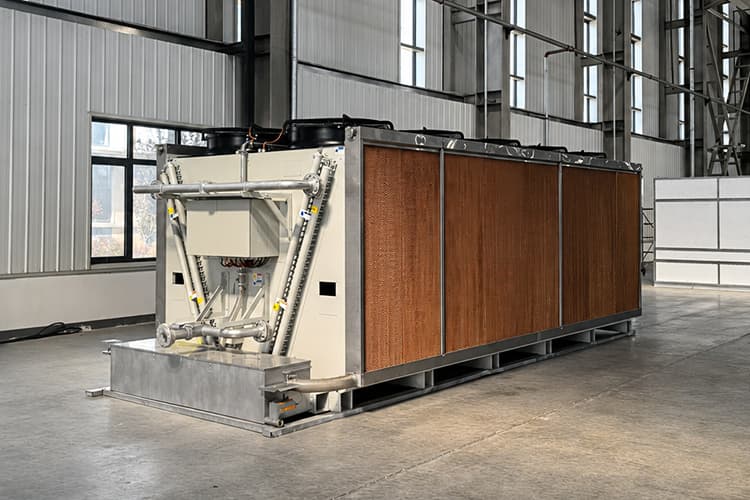
Adiabatic Cooler

Adiabatic Cooler

Adiabatic coolers combine dry air-cooled operation with evaporative pre-cooling during high ambient conditions. They improve peak cooling performance while using significantly less water than a traditional wet cooling tower.

  • Enhanced performance in hot climates
  • Water-saving hybrid operation
  • Suitable for high ambient temperature projects
View Adiabatic Options →
Industrial Air Cooler

Industrial Air Cooler

Industrial air coolers are engineered for heavy-duty process heat rejection, equipment cooling and industrial fluid cooling. They can be customized for special fluids, harsh environments, corrosion resistance and project-specific operating conditions.

  • Heavy-duty industrial cooling
  • Custom coil and material options
  • Suitable for process and equipment cooling
View Industrial Options →
Applications

Applications of Dry Coolers

Dry coolers are used where heat must be rejected to ambient air without directly exposing process fluid to outdoor air or requiring continuous evaporative water consumption. They are widely used in HVAC, process cooling, data centers, refrigeration, power generation and industrial equipment cooling.

Definition

What Is a Dry Cooler?

A dry cooler is an air-cooled heat exchanger that removes heat from a circulating fluid and rejects it to ambient air. The process fluid flows inside finned tube coils, while fans move air across the coil surface. Heat transfers from the fluid to the coil tubes and fins, then to the air.

Unlike an open cooling tower, a dry cooler does not cool water through direct evaporative contact. The process fluid remains inside a closed coil, which helps reduce contamination and water treatment requirements. Dry coolers are also called air-cooled fluid coolers, air coolers or dry air coolers in many HVAC and industrial applications.

Dry cooler Air-cooled fluid cooler Industrial air cooler Air-cooled heat exchanger
Working Principle

How Does a Dry Cooler Work?

A dry cooler works through sensible heat transfer instead of direct evaporative cooling. Hot fluid flows inside finned tubes, and fans pull or push ambient air across the coil. Heat moves from the fluid to the tube wall, from the tube to the fins, and from the fins to the passing air.

Dry Coolers working principle diagram
1
Hot fluid enters the coilWater, glycol solution or process fluid flows through finned tubes.
2
Fans move ambient airAxial fans drive air across the finned coil surface.
3
Heat transfers through coil and finsHeat moves from the fluid to tube walls, fins and then to air.
4
Hot air is dischargedThe warmed air leaves the dry cooler and rejects heat to the atmosphere.
5
Cooled fluid returns to the systemThe cooled fluid returns to the process, chiller loop or equipment system.
Comparison

Dry Cooler vs Wet Cooling Tower

Dry coolers and wet cooling towers are both heat rejection systems, but they use different cooling methods. A dry cooler rejects heat through air-cooled coils, while a wet cooling tower rejects heat mainly through evaporation. The right choice depends on water availability, required outlet temperature, ambient conditions, maintenance preference and project budget.

Dry Cooler
Wet Cooling Tower
Item Dry Cooler Wet Cooling Tower
Cooling Method Sensible heat transfer through finned coils and airflow Evaporative cooling through water-air interaction
Water Consumption Very low or none during dry operation Requires make-up water due to evaporation, drift and blowdown
Outlet Temperature Limit Limited by ambient dry bulb temperature Limited by ambient wet bulb temperature
Fluid Cleanliness Fluid stays inside a closed coil Open tower water is exposed to air
Water Treatment Lower requirement for open water treatment Requires treatment for scale, corrosion and biological growth
Best For Water-saving projects, closed-loop fluid cooling and winter operation Projects requiring lower outlet water temperatures and evaporative efficiency
Main Advantage Low water consumption and clean closed-loop operation High cooling effectiveness in suitable wet bulb conditions
Technical Selection

Technical Selection Guide for Dry Coolers

Selecting a dry cooler requires accurate heat load, fluid flow rate, inlet and outlet fluid temperature, ambient dry bulb temperature, fluid type, glycol concentration, allowable pressure drop, installation space and noise requirement. For adiabatic coolers, local water quality and adiabatic operating strategy should also be considered.

Selection Parameter Meaning Why It Matters
Heat Rejection Capacity Total heat that must be rejected Determines coil size, airflow and number of fans
Fluid Flow Rate Amount of fluid circulating through the coil Affects coil sizing, pressure drop and heat transfer
Inlet Fluid Temperature Hot fluid temperature entering the dry cooler Defines the starting thermal condition
Outlet Fluid Temperature Required cooled fluid temperature Determines cooling target and heat exchanger size
Ambient Dry Bulb Temperature Outdoor air temperature for dry operation Limits dry cooler outlet temperature and capacity
Fluid Type Water, glycol solution or process fluid Influences coil material, flow resistance and freeze protection
Glycol Concentration Percentage of glycol in the fluid loop Affects heat transfer, viscosity and pressure drop
Allowable Pressure Drop Maximum acceptable coil-side resistance Important for pump selection and system efficiency
Noise Requirement Acceptable sound level at the project site Affects fan speed, fan diameter and low-noise configuration
Installation Space Available footprint, height and service clearance Influences V type, horizontal or custom dry cooler selection
Adiabatic Requirement Need for evaporative pre-cooling during hot weather Improves peak capacity while controlling water use

Not Sure Which Dry Cooler Is Right for Your Project?

Choosing between a V type dry cooler, horizontal dry cooler, adiabatic cooler and industrial air cooler can be difficult without complete operating data. Send us your fluid type, flow rate, temperatures, ambient conditions and site requirements, and our engineering team will recommend a suitable configuration.

Heat load Flow rate Fluid type Dry bulb temperature Noise limits
Ask for Model Selection
Material Options

Dry Cooler Material Options

Material selection affects heat transfer, corrosion resistance, pressure rating, service life and project cost. For dry coolers, coil materials, fin materials, frame structure and casing protection should be selected according to fluid type, ambient conditions, industrial environment and corrosion level.

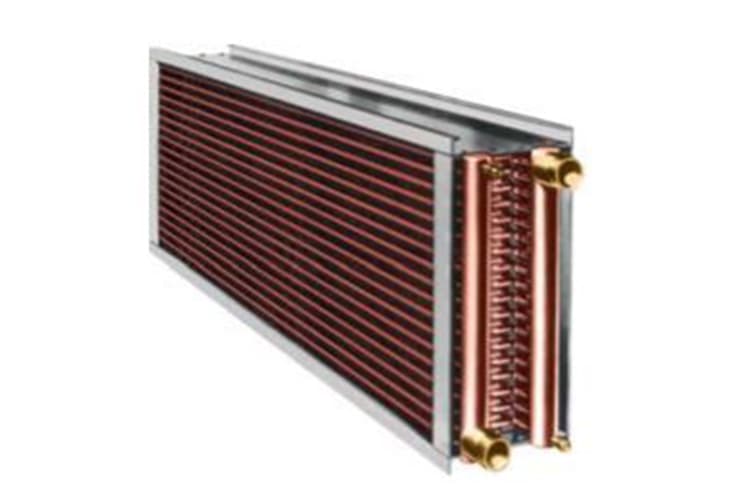
Copper Tube / Aluminum Fin Coil

Copper Tube / Aluminum Fin Coil

Copper tube and aluminum fin coils are commonly used for efficient heat transfer in HVAC and general fluid cooling applications.

Common value: efficient heat transfer, practical cost and wide application compatibility.
Stainless Steel Options

Stainless Steel Options

Stainless steel can be selected for special fluids, corrosive environments or applications requiring higher durability.

Common options: #304 / #316 stainless steel tube, header, frame or special components.
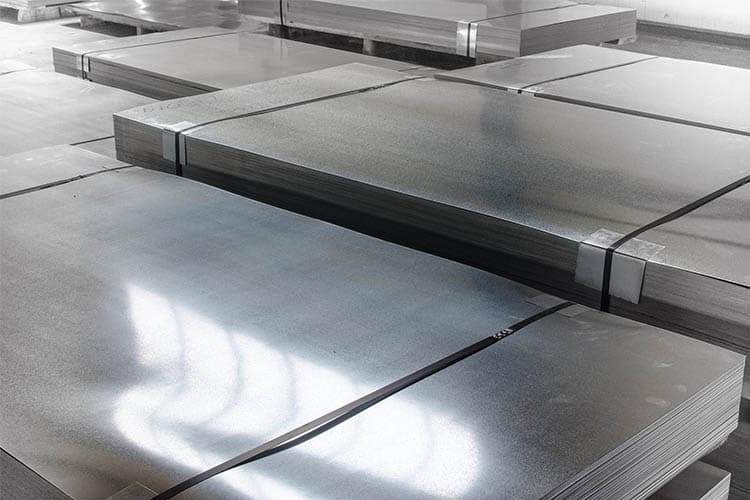
Galvanized / Aluzinc Steel Structure

Galvanized / Aluzinc Steel Structure

Galvanized steel and Aluzinc steel are often used for frame, casing and support structures where strength and cost efficiency are important.

Common use: casing, support structure, panels, fan deck and structural parts.
Key Components

Key Components of a Dry Cooler

Dry cooler performance depends on coil design, fin spacing, fan selection, motor control, casing structure, headers, safety guards and optional adiabatic pre-cooling system. A professional dry cooler design should balance capacity, pressure drop, energy consumption, noise and maintenance.

Finned Tube Coils

Finned Tube Coils

The core heat exchanger where fluid transfers heat to tube walls, fins and passing air.

Axial Fan

Axial Fan

Moves ambient air across the coil. Fan diameter, speed and blade design affect performance and noise.

Fluid Headers and Connections

Fluid Headers and Connections

Distributes fluid through the coil and connect the dry cooler to the process or HVAC system.

Fan Motor and Drive System

Fan Motor and Drive System

Supports fan operation and can include EC fans, variable speed control or staged fan control.

Casing and Frame

Casing and Frame

Provides structural strength, protects components and supports outdoor installation.

Operation & Maintenance

Operation and Maintenance for Dry Coolers

Dry coolers generally require less water treatment than wet cooling towers, but they still require regular inspection. Coil cleanliness, fan operation, motor condition, airflow clearance and glycol concentration should be checked to maintain stable performance and prevent capacity loss.

Coil Cleaning

Dust, pollen and debris on finned coils can reduce heat transfer. Regular coil inspection and cleaning help maintain capacity.

  • Inspect fin condition
  • Remove debris from air inlets
  • Clean coil surfaces when needed

Fan and Motor Inspection

Fans, motors and controls should be checked for stable operation, vibration, noise and electrical condition.

  • Check fan blades
  • Inspect motors and wiring
  • Verify fan control logic

Fluid Loop Management

Water or glycol loops should be monitored for freeze protection, corrosion control, pressure drop and flow stability.

  • Check glycol percentage
  • Monitor flow rate
  • Inspect headers and connections
Advantages

Advantages of Dry Coolers

Dry coolers are often selected when water saving, closed-loop fluid protection, lower water treatment demand and reliable outdoor heat rejection are important project priorities.

Low Water Consumption

Dry operation rejects heat to ambient air without continuous evaporative water use.

Closed Fluid Loop

The process fluid remains inside the coil, reducing contamination from outdoor air.

Lower Water Treatment Demand

No open recirculating water loop is required during dry operation.

Suitable for Winter Operation

Dry coolers can work with glycol systems and low ambient conditions.

Reduced Plume Risk

Dry operation avoids visible water vapor plume common in wet cooling systems.

Flexible Installation

V type, horizontal and custom layouts can match rooftop, ground or plant installations.

Good for Water-Scarce Areas

Useful where water cost, water availability or environmental restrictions are important.

Process Fluid Protection

Closed coil operation helps protect equipment and process loops from external contamination.

Why Choose Thermocore

Why Choose Thermocore Dry Coolers

Thermocore supports HVAC engineers, industrial end users, contractors and distributors with project-based dry cooler selection, durable materials, custom design options and export project support.

Why Choose Thermocore

HVAC-Based Selection

Selection based on heat load, fluid temperatures, ambient dry bulb, glycol percentage and pressure drop.

Multiple Configurations

V type, horizontal, adiabatic and industrial air cooler configurations for different applications.

Coil Design Support

Coil material, fin spacing, circuiting and header design can be selected according to the project.

Export Project Support

Technical communication, drawings, packaging, container loading and shipping coordination.

Water-Saving Solutions

Dry and adiabatic systems help reduce water consumption compared with wet cooling towers.

Industrial Application Experience

Suitable for HVAC, data centers, refrigeration, power, process and manufacturing cooling systems.

Noise and Layout Options

Fan selection, unit layout and control strategy can be adapted for site constraints.

Custom Engineering

Support for special fluids, corrosion resistance, low ambient operation and OEM projects.

Custom Engineering

Custom Engineering Options for Dry Coolers

Different dry cooler projects require different configurations. We support customization for cooling capacity, coil design, fan system, adiabatic pre-cooling, material selection, corrosion resistance, low-noise operation, special voltage and international shipping requirements.

Custom Dry Cooler Engineering Drawing

Thermal & Structure Customization

For projects with special capacity, footprint, height, airflow direction or installation space requirements.

Heat rejection capacity V type structure Horizontal layout Modular design Airflow direction

Coil & Material Customization

For special fluids, glycol systems, corrosion environments and industrial process cooling requirements.

Copper / aluminum coil Stainless steel options Fin spacing Header design Anti-corrosion coating

Project & Control Customization

For sites requiring low noise, adiabatic operation, special voltage, winter operation or export packaging.

EC fans Variable speed control Adiabatic pre-cooling Special voltage Container loading
FAQ

Dry Cooler FAQ

These questions are written to answer common buyer, HVAC engineer and AI-search queries about dry coolers, adiabatic coolers and industrial air coolers.

What is a dry cooler?

A dry cooler is an air-cooled heat exchanger that removes heat from a circulating fluid through finned coils and fans, rejecting heat to ambient air.

How does a dry cooler work?

Hot fluid flows through finned tubes while fans move ambient air across the coil. Heat transfers from the fluid to the tubes, fins and air.

What is the difference between a dry cooler and a wet cooling tower?

A dry cooler rejects heat through air-cooled coils with little or no water consumption, while a wet cooling tower rejects heat mainly through evaporative cooling.

When should I choose a dry cooler?

A dry cooler is suitable when water saving, closed-loop fluid protection, lower water treatment demand or winter operation is important.

What is a V type dry cooler?

A V type dry cooler uses V-shaped coil banks to provide larger heat exchange area in a compact footprint.

What is a horizontal dry cooler?

A horizontal dry cooler uses a flat or horizontal coil and fan layout, often selected for lower profile installation and easy maintenance access.

What information is needed to select a dry cooler?

Heat rejection capacity, fluid type, flow rate, inlet and outlet fluid temperature, ambient dry bulb temperature, glycol concentration, pressure drop, noise requirement and installation space are usually needed.

Are dry coolers suitable for data centers?

Yes. Dry coolers can support closed-loop or free cooling systems for data centers where water saving and reliability are important.

Do dry coolers need water treatment?

Dry coolers usually require less open water treatment than wet cooling towers, but the closed fluid loop should still be managed for corrosion protection, glycol concentration and fluid quality.

Can dry coolers be customized?

Yes. Capacity, coil design, fan system, materials, adiabatic system, control strategy, voltage, noise level and layout can be customized.
Start Your Project

Need a Dry Cooler for Your HVAC or Industrial Cooling Project?

Send us your heat rejection capacity, fluid type, flow rate, inlet and outlet fluid temperature, ambient dry bulb temperature, glycol percentage and project location. Our engineering team will help you select a suitable V type dry cooler, horizontal dry cooler, adiabatic cooler or industrial air cooler configuration.

Scroll to Top