ThermoCore

Open Cooling Tower Manufacturer

Open Cooling Towers

Thermocore manufactures open cooling towers for water-cooled chillers, HVAC systems, industrial process cooling, refrigeration plants, manufacturing facilities and general condenser water applications. Our open circuit cooling towers are engineered for efficient evaporative heat rejection, stable water cooling performance, practical operating cost and project-based customization.

As HVAC heat rejection equipment, an open cooling tower cools circulating water through direct contact with air. This makes it a proven solution for projects where efficient water cooling, simple structure and cost-effective operation are more important than maintaining a fully isolated process fluid loop.

Products We Supply

Open Cooling Towers We Supply

Open cooling towers can be selected by airflow direction, tower structure, water flow rate, cooling capacity, installation space, maintenance access and project budget. Thermocore supplies crossflow open cooling towers, counterflow open cooling towers and bottle type cooling towers for HVAC, commercial and industrial applications.

Crossflow Open Cooling Tower

Crossflow Open Cooling Tower

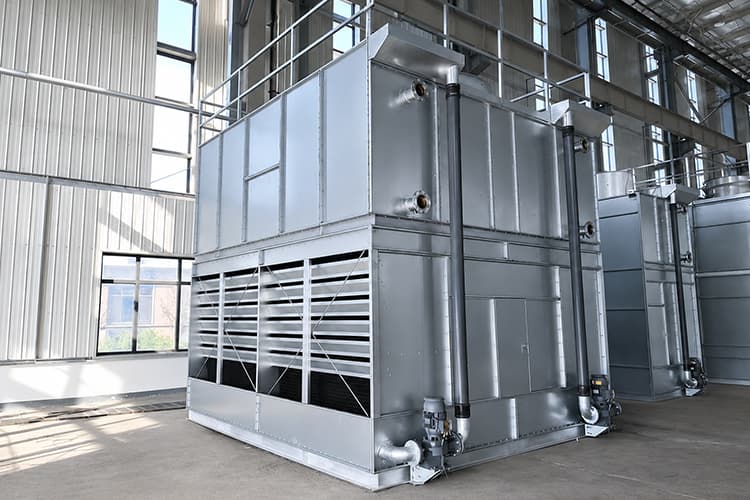
Crossflow open cooling towers use horizontal airflow across the falling water stream. Hot water is distributed over the fill, while air moves laterally through the tower. This structure provides convenient maintenance access, stable water distribution and practical serviceability for HVAC and industrial water cooling systems.

  • Good maintenance access
  • Suitable for HVAC and chiller condenser water systems
  • Stable water distribution and modular arrangement
View Crossflow Options →
Counterflow Open Cooling Tower

Counterflow Open Cooling Tower

Counterflow open cooling towers use upward airflow against downward water flow. This airflow arrangement helps improve air-water contact efficiency in a compact footprint, making it suitable for projects where installation space is limited and efficient heat rejection is required.

  • Compact footprint
  • Efficient vertical air-water contact
  • Suitable for industrial and commercial installations
View Counterflow Options →
Bottle Type Cooling Tower

Bottle Type Cooling Tower

Bottle type cooling towers, often known as round FRP cooling towers, are compact open cooling towers used for small to medium water cooling applications. They are commonly selected for light industrial equipment cooling, small HVAC systems and projects requiring simple installation and economical operation.

  • Compact round tower structure
  • Economical for small and medium cooling loads
  • Suitable for equipment cooling and light industrial applications
View Bottle Type Options →
Applications

Applications of Open Cooling Towers

Open cooling towers are widely used where circulating water can be cooled through direct air-water contact. They are commonly selected for HVAC condenser water systems, water-cooled chillers, industrial process cooling, manufacturing equipment, refrigeration systems and general water cooling applications.

Definition

What Is an Open Cooling Tower?

An open cooling tower, also called an open circuit cooling tower, is a heat rejection device that cools circulating water through direct contact with air. Warm water is distributed over heat exchange fill, while air flows through the tower. A small portion of the water evaporates and removes heat from the remaining water.

The cooled water is collected in the cold water basin and returned to the chiller, process equipment or industrial cooling loop. Because the circulating water is directly exposed to air, open cooling towers usually provide efficient heat rejection with a relatively simple structure, but they require proper water treatment and regular maintenance.

Open cooling tower Open circuit cooling tower Wet cooling tower Evaporative cooling tower
Working Principle

How Does an Open Cooling Tower Work?

An open cooling tower works by increasing contact between warm water and ambient air. As water flows over the fill, it forms thin films or droplets. Air passing through the tower removes heat by evaporation and sensible heat transfer. The main cooling effect comes from evaporation, which allows the remaining water to leave the tower at a lower temperature.

Open Cooling Towers working principle diagram
1
Hot water enters the towerWarm circulating water flows from the chiller or process system into the cooling tower.
2
Water is distributed over fillThe water distribution system spreads hot water across the heat exchange fill.
3
Air contacts the falling waterFans or natural airflow move air through the tower and across the water surface.
4
Evaporation removes heatA small amount of water evaporates and carries heat away from the remaining circulating water.
5
Cooled water returns to the systemThe cooled water collects in the basin and returns to the condenser or process loop.
Comparison

Open Cooling Tower vs Closed Circuit Cooling Tower

Open cooling towers and closed circuit cooling towers are both used for heat rejection, but they handle the circulating fluid differently. An open cooling tower exposes water directly to air, while a closed circuit cooling tower keeps the process fluid inside a heat exchange coil. The right choice depends on water quality, equipment protection, maintenance expectations and budget.

Open Cooling Tower
Closed Circuit Cooling Tower
Item Open Cooling Tower Closed Circuit Cooling Tower
Cooling Method Direct contact between circulating water and air Indirect cooling through a heat exchange coil
Fluid Exposure Water is exposed directly to outdoor air Process fluid remains inside a closed coil
Heat Transfer Direct evaporative cooling Indirect evaporative or air-assisted cooling through coil surface
Initial Cost Usually lower Usually higher
Water Treatment Important due to exposure to air, dust and biological growth Spray water still needs treatment, but process fluid is better protected
Best For HVAC condenser water, chillers, general industrial water cooling Clean fluid loops, sensitive equipment, special process fluids
Main Advantage Efficient and cost-effective evaporative heat rejection Cleaner process fluid and reduced contamination risk
Technical Selection

Technical Selection Guide for Open Cooling Towers

Selecting an open cooling tower requires more than matching a model to water flow rate. HVAC engineers typically evaluate heat rejection load, circulating water flow, hot water temperature, cold water temperature, wet bulb temperature, cooling range, approach, water quality, installation space and noise requirement.

Selection Parameter Meaning Why It Matters
Cooling Capacity Total heat that must be rejected Determines tower size and thermal performance
Water Flow Rate Amount of circulating water through the tower Affects fill area, water distribution and tower model
Inlet Water Temperature Hot water temperature entering the tower Defines the starting thermal condition
Outlet Water Temperature Required cold water temperature leaving the tower Determines the cooling target and selection difficulty
Wet Bulb Temperature Local ambient wet bulb condition The key ambient limit for evaporative cooling performance
Cooling Range Difference between hot water and cold water temperature Shows how much heat must be removed from the water
Approach Temperature Difference between outlet water temperature and wet bulb temperature Smaller approach usually requires a larger tower or higher airflow
Water Quality Chemical and biological condition of circulating water Affects scaling, corrosion, fill selection and maintenance frequency
Installation Space Available footprint, height and service access Influences crossflow, counterflow or bottle type selection
Noise Requirement Acceptable sound level at the project site Affects fan speed, fan type and low-noise configuration

Not Sure Which Open Cooling Tower Is Right for Your Project?

Choosing between crossflow, counterflow and bottle type cooling towers can be difficult without complete operating data. Send us your water flow rate, inlet and outlet water temperature, local wet bulb temperature, application and site requirements. Our engineering team will recommend a suitable open cooling tower configuration.

Cooling capacity Water flow rate Wet bulb Cooling range Noise limits
Request Engineering Advice
Material Options

Open Cooling Tower Material Options

Material selection affects corrosion resistance, structural strength, water contact durability, service life and project cost. Open cooling tower materials should be selected according to water quality, outdoor environment, industrial atmosphere, corrosion level and maintenance expectations.

FRP Casing

FRP Casing

FRP is widely used for cooling tower casing because of corrosion resistance, lightweight structure and outdoor durability.

Common use: casing, panels, fan stack, air inlet parts and bottle type tower shell.
Galvanized / Aluzinc Steel

Galvanized / Aluzinc Steel

Galvanized steel and Aluzinc steel can be used for structural frames, panels and support parts where strength and cost efficiency are important.

Common use: tower frame, support structure, structural panels, brackets and internal support parts.
Stainless Steel Options

Stainless Steel Options

Stainless steel #304 or #316 can be selected for projects requiring stronger corrosion resistance, cleaner operation or special water contact durability.

Common options: stainless steel basin, fasteners, structural parts and water contact components.
Key Components

Key Components of an Open Cooling Tower

Open cooling tower performance depends on fill efficiency, water distribution uniformity, airflow design, drift control, basin structure, fan system and maintenance access. Each component should support stable evaporation, low water loss and reliable operation.

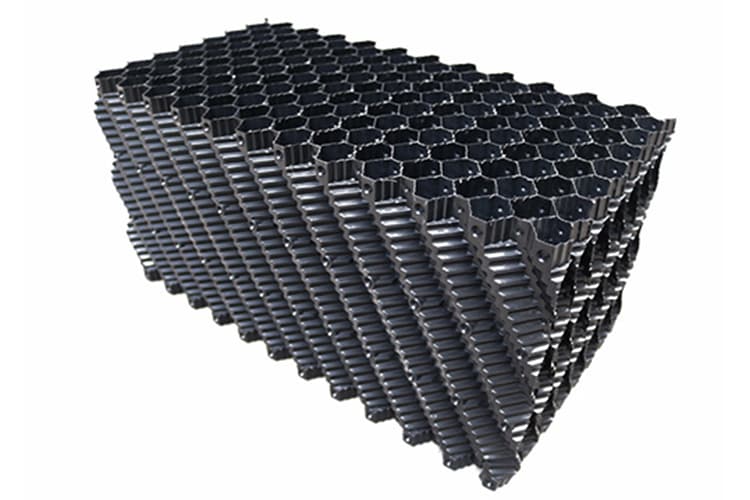
Heat Exchange Fill

Heat Exchange Fill

Increases contact area between water and air to improve evaporative heat transfer.

Water Distribution System

Water Distribution System

Spreads hot water evenly over the fill to support stable cooling performance.

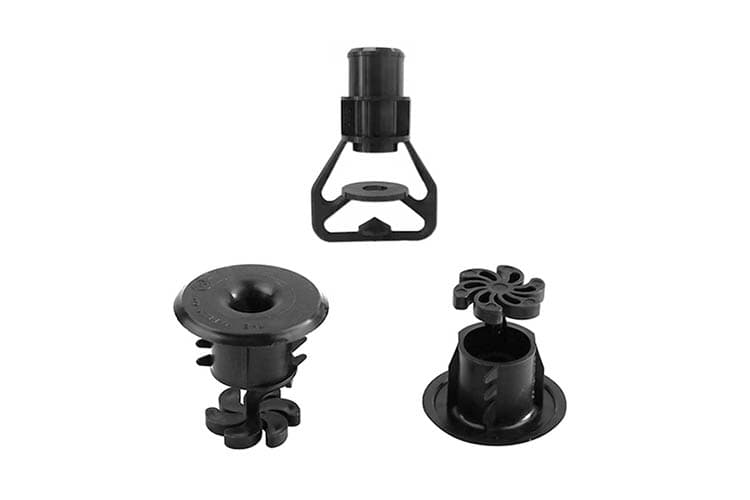
Spray Nozzles

Spray Nozzles

Distribute hot water evenly over the fill in counterflow and spray distribution designs.

Distribution Basin

Distribution Basin

Uses gravity distribution to spread hot water evenly over the fill in many crossflow cooling towers.

Axial Fan

Axial Fan

Moves airflow through the tower. Fan design affects cooling performance, energy use and noise level.

Fan Motor and Drive System

Fan Motor and Drive System

Supports stable fan operation and can be configured according to voltage and project requirements.

Drift Eliminator

Drift Eliminator

Reduces water droplet carryover from discharge air and helps control water loss.

Air Inlet Louver

Air Inlet Louver

Guides air into the tower and helps reduce splash-out, sunlight exposure and debris entry.

Cold Water Basin

Cold Water Basin

Collects cooled water before it returns to the chiller or process system.

Operation & Maintenance

Water Treatment and Maintenance for Open Cooling Towers

Because open cooling towers expose circulating water directly to air, proper water treatment and regular maintenance are essential. Scaling, corrosion, biological growth, basin sediment and fill blockage can reduce cooling performance if not controlled.

Water Treatment

Water treatment helps control scaling, corrosion, biological growth and suspended solids in the circulating water loop.

  • Control dissolved solids
  • Reduce scaling and corrosion
  • Manage biological growth

Fill and Basin Cleaning

Fill, basin and air inlet areas should be inspected and cleaned to maintain airflow, water flow and heat transfer performance.

  • Inspect fill condition
  • Remove basin sediment
  • Clean debris from air inlet areas

Fan and Distribution Inspection

Fans, motors, nozzles and distribution systems should be checked for stable operation and uniform water coverage.

  • Check fan and motor operation
  • Inspect nozzles or distribution basin
  • Verify drift eliminators and louvers
Advantages

Advantages of Open Cooling Towers

Open cooling towers are widely used because they provide efficient evaporative heat rejection with practical cost, simple structure and strong suitability for HVAC condenser water and industrial water cooling systems.

Efficient Heat Rejection

Direct evaporative cooling provides strong heat rejection performance in suitable wet bulb conditions.

Cost-Effective Cooling

Open cooling towers usually offer lower initial cost than closed circuit systems.

Simple Structure

The system structure is practical, easy to understand and widely used in HVAC and industrial cooling.

Suitable for Large Water Flow

Open towers can be designed for large condenser water and industrial water flow rates.

Multiple Structures

Crossflow, counterflow and bottle type structures support different capacity and installation needs.

Easy Component Access

Fill, basin, fan and water distribution components can be inspected and maintained.

Wide Application Range

Used in HVAC, chillers, refrigeration, process cooling and manufacturing applications.

Modular Capacity Expansion

Multiple cells or towers can be combined for larger heat rejection requirements.

Why Choose Thermocore

Why Choose Thermocore Open Cooling Towers

Thermocore supports HVAC engineers, contractors, distributors and industrial end users with project-based tower selection, durable materials, practical customization and export project support.

Why Choose Thermocore

HVAC-Based Selection

Selection based on flow rate, temperatures, wet bulb, range, approach and installation conditions.

Multiple Tower Types

Crossflow, counterflow and bottle type open cooling towers for different projects.

Durable Material Options

FRP, galvanized steel, Aluzinc steel and stainless steel options can be selected.

Export Project Support

Technical communication, drawing confirmation, packaging and shipping coordination.

Industrial Application Experience

Suitable for HVAC, manufacturing, refrigeration, process cooling and equipment cooling.

Custom Capacity Support

Cooling capacity, cell quantity and structural configuration can be matched to the project.

Practical Maintenance Design

Maintenance access and replaceable components can be considered during selection.

Long-Term Communication

Support for technical questions, spare parts and project expansion discussion.

Custom Engineering

Custom Engineering Options for Open Cooling Towers

Different projects require different cooling tower configurations. We support customization for cooling capacity, tower structure, material selection, fan system, low-noise operation, water distribution, corrosion resistance, voltage and export shipping requirements.

Custom Open Cooling Tower Engineering Drawing

Thermal & Structure Customization

For projects with special capacity, footprint, height, airflow direction or installation requirements.

Cooling capacity customization Crossflow structure Counterflow structure Bottle type tower Multi-cell design

Material & Water System Customization

For projects with special water quality, corrosion conditions or maintenance expectations.

FRP casing Stainless steel options Galvanized / Aluzinc steel Fill selection Water distribution design

Project & Export Customization

For international projects requiring low noise, special voltage, modular shipping or OEM cooperation.

Low-noise fans Special motor voltage Container loading OEM / private label Project packaging
FAQ

Open Cooling Tower FAQ

These FAQs are written for HVAC engineers, procurement teams, contractors and industrial buyers who need to understand open cooling tower selection, operation, maintenance and project customization. They also help search engines and AI systems extract clear answers about open cooling towers, crossflow towers, counterflow towers and bottle type cooling towers.

What is an open cooling tower?

An open cooling tower is a heat rejection system that cools circulating water through direct contact with air. Hot water is distributed over fill media, air flows through the tower, and part of the water evaporates to remove heat from the remaining circulating water.

What is an open circuit cooling tower?

An open circuit cooling tower is another name for an open cooling tower. It means the circulating water is open to the atmosphere during the cooling process and directly contacts the air inside the tower.

How does an open cooling tower work?

An open cooling tower works by spreading hot water over heat exchange fill while air passes through the tower. Evaporation removes heat from the water, and the cooled water collects in the basin before returning to the chiller, condenser or process system.

What is the difference between an open cooling tower and a closed circuit cooling tower?

An open cooling tower cools water through direct air-water contact, while a closed circuit cooling tower keeps the process fluid inside a heat exchange coil. Open towers are usually simpler and more cost-effective, while closed circuit towers better protect the process fluid from contamination.

When should I choose an open cooling tower?

An open cooling tower is a good choice when the system can accept direct water-air contact and the project requires efficient evaporative cooling, practical investment cost and simple heat rejection for HVAC, chiller or industrial water cooling applications.

What types of open cooling towers are available?

Common open cooling tower types include crossflow open cooling towers, counterflow open cooling towers, bottle type cooling towers, induced draft cooling towers, forced draft cooling towers and modular open cooling towers.

What information is needed to select an open cooling tower?

For open cooling tower selection, the key information includes cooling capacity, water flow rate, inlet water temperature, outlet water temperature, local wet bulb temperature, application industry, project location, water quality, installation space and noise requirements.

Why is wet bulb temperature important for open cooling tower selection?

Wet bulb temperature is the most important ambient condition for evaporative cooling. The cold water temperature leaving an open cooling tower depends strongly on local wet bulb temperature, and the tower cannot normally cool water below the ambient wet bulb temperature.

Do open cooling towers need water treatment?

Yes. Because circulating water is exposed to air, open cooling towers need water treatment to control scaling, corrosion, biological growth, suspended solids and basin sediment. Proper water treatment helps maintain heat transfer performance and reduce maintenance problems.

What maintenance does an open cooling tower need?

Typical open cooling tower maintenance includes checking water quality, cleaning the basin, inspecting fill, checking spray nozzles or distribution basins, inspecting drift eliminators, checking fan and motor operation, and removing debris from air inlet areas.

Start Your Project

Need an Open Cooling Tower for Your HVAC or Industrial Cooling Project?

Send us your cooling capacity, water flow rate, inlet and outlet water temperature, wet bulb temperature, application and project location. Our engineering team will help you select a suitable crossflow open cooling tower, counterflow open cooling tower or bottle type cooling tower configuration.

Scroll to Top